
Stay Human: Finding Your Ethical Stance on Artificial Intelligence
Join us July 13-14th for two mornings of real conversation about what it means to teach with integrity in the age of AI.
Every week there's a new AI tool, a new district mandate, a new headline telling you everything is about to change. Artificial intelligence is being shoved into everything, whether we want it or not, and yet we're also seeing a tech backlash where schools are taking instruction offline and returning to paper and pencil.
Somewhere underneath the noise is a question most teachers never get asked: What do YOU believe about this, and why?
That's what these two mornings are for.
Day 1 is about your values. We'll talk about what AI can and cannot do, how it actually works, and help you determine where you land on the spectrum from enthusiast to conscientious objector, along with six strategic stances educators can take beyond just "use it for everything" or "refuse it."
Day 2 shifts to your students. Explore what the learning science says about AI in kids' hands so you can decide whether and how you want to support them in using it, and learn how to help students think about the impact of AI on their cognitive capacity, productive struggle, creativity, and future.
And, it's not a how-to.

Day 1: Humanizing TEACHING in the Age of AI
Monday, July 13 | 10:00am-12:30pm ET
Day 2: Humanizing LEARNING in the Age of AI
Tuesday, July 14 | 10:00am-12:30pm ET
Sessions will run on July 13th and 14th from 10 am - 12:30 pm ET, totaling 5 hours of training. A certificate of completion will be provided.
You can bring your total up to 7 hours of PD credit by completing the optional independent work (one hour each day) using a provided worksheet to document your reflections and formalize your AI plan.
Additional hour after Day 1:
Using a provided reflection form, you'll reflect on the six stances framework and identify which stance feels right for different tasks and contexts in your own teaching. You'll also capture your current thinking by drafting your personal AI teaching philosophy.
Additional hour after Day 2:
Using a provided template, you'll draft a classroom AI policy that reflects your values and is realistic for your school context, along with a final personal AI teaching philosophy statement you could actually share with students, parents, or colleagues.
Identify where you stand on the spectrum from AI enthusiast to conscientious objector, and why
Explain how AI actually works well enough to make informed decisions about it, whether or not you choose to use it
Use a clear framework for making consistent ethical decisions about your own AI use instead of reacting case by case
Articulate what the learning science says about AI in students' hands and what's actually at stake for their learning
Describe what responsible student AI use looks like and how to teach it
Walk into your classroom in the fall with a personal AI teaching philosophy and a draft policy that's actually yours
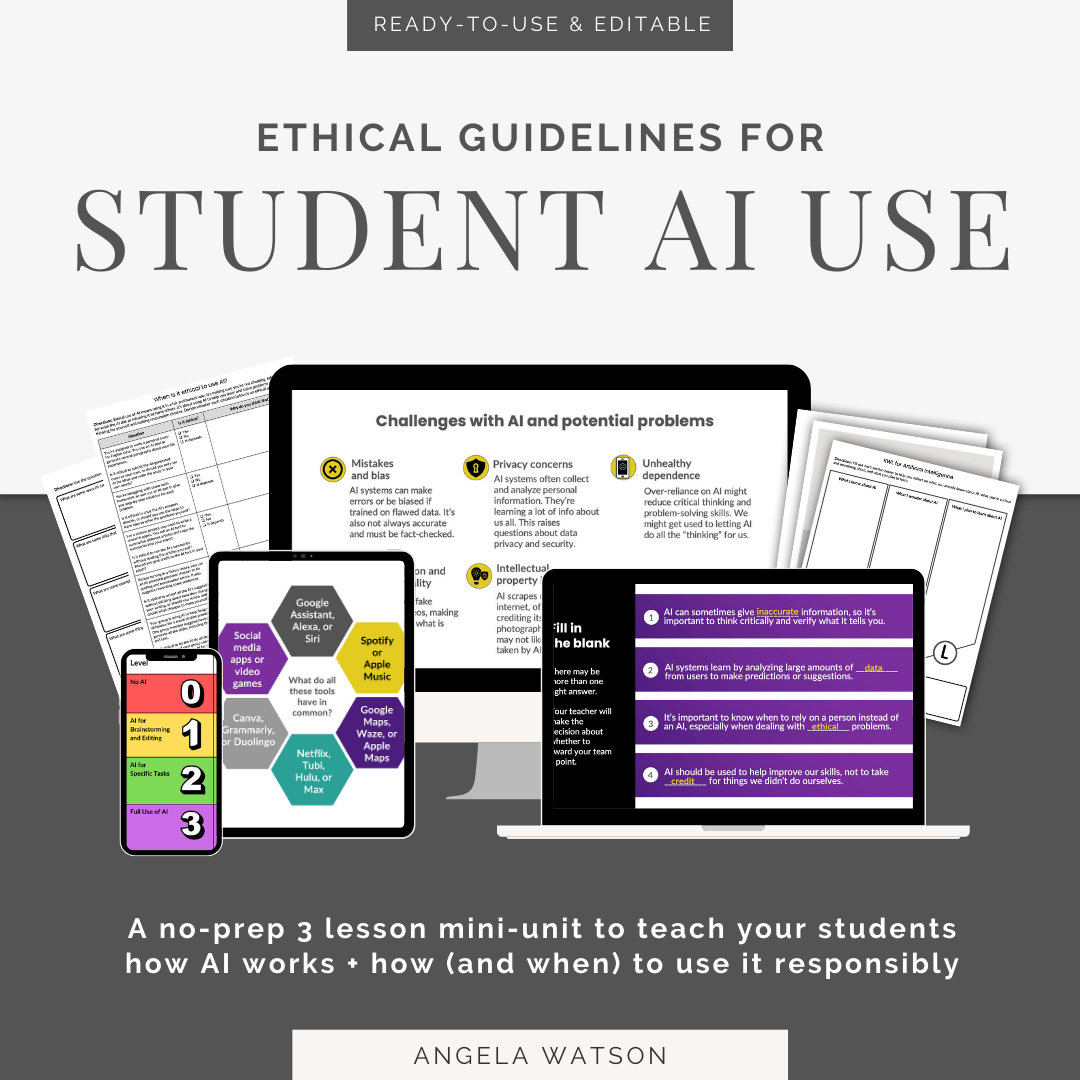
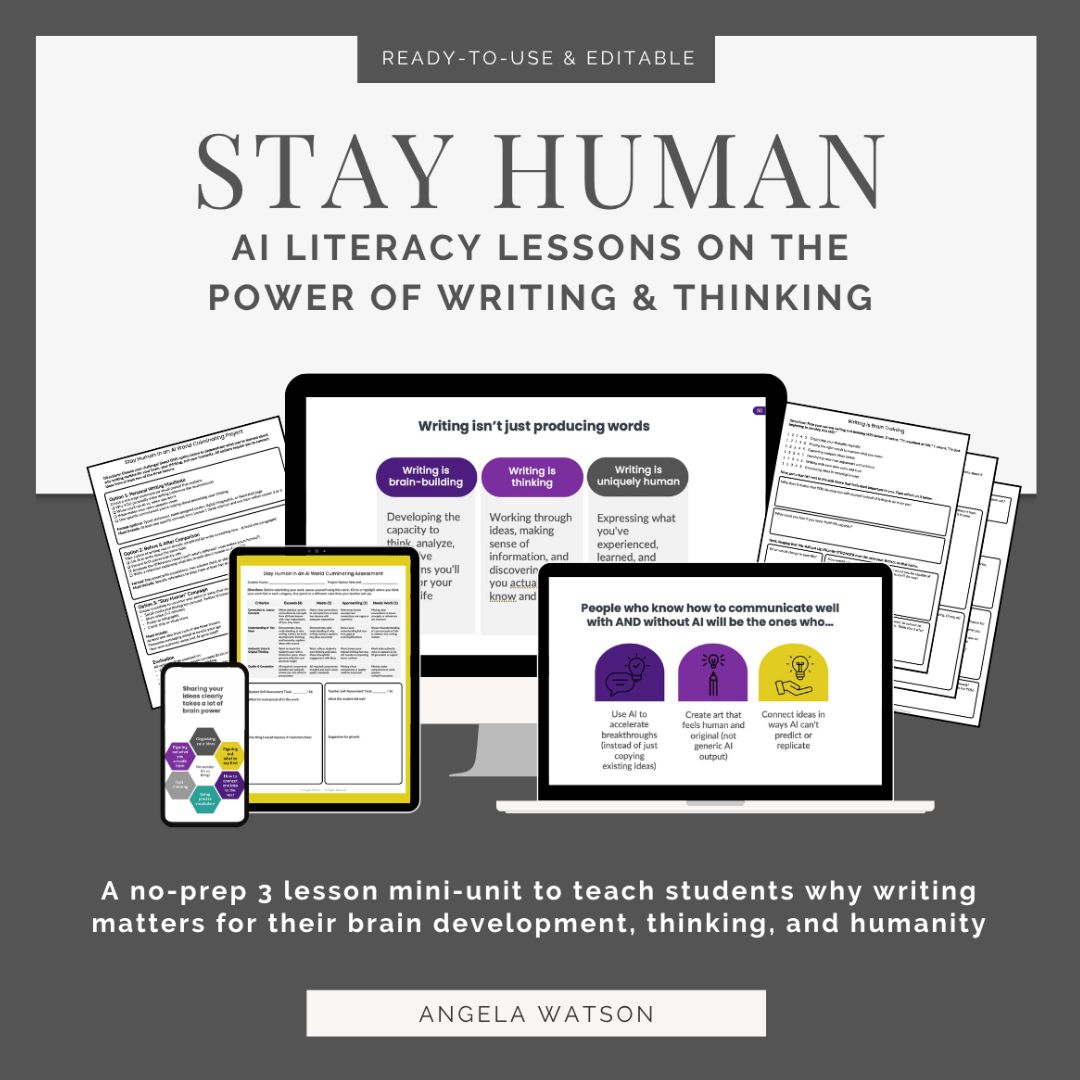
These slide decks + student journals will help you guide your students to reflect on the role of AI in their lives, too.
Your $97 purchase includes live interactive sessions and all recordings. Use discount code SUMMER to take $30 off.